
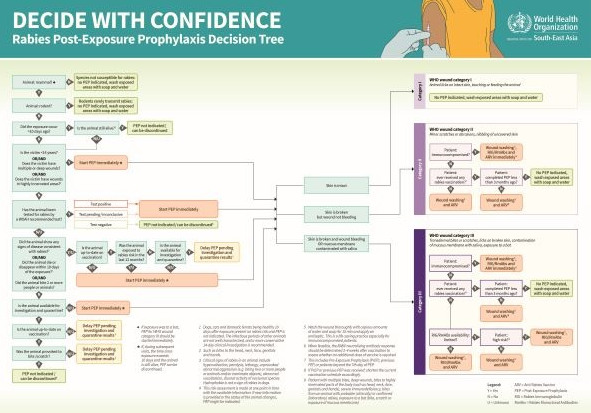
If you were bitten today, start here
- Wash the wound under running water with soap or detergent for 15 minutes. Do this before you read anything else.
- Go to any Puskesmas or hospital emergency department today. Do not wait to see whether the dog gets sick.
- Do not kill the dog. Cage it and watch it for 10 to 14 days.
- Report the bite to the Puskesmas and to your Kepala Desa or Kaling.
Everything below explains those four lines.
Rabies in Bali is endemic, and that is a manageable fact
Rabies in Bali is not a rumour, and it is not a reason to panic. Bali has been an endemic area for rabies since 2008, when the first human deaths were confirmed on the Bukit peninsula in the south of the island. The virus is understood to have arrived with infected dogs carried in by fishing boats and to have been circulating for some months before anyone recognised it. While news headlines often exaggerate outbreaks for sensationalism, rabies remains a manageable public health reality that can be effectively controlled through prompt medical response.
Rabies affects all warm-blooded mammals. In Indonesia, dogs are the main transmitting animal at around 98 per cent, followed by cats and monkeys, though bats and livestock can also carry and transmit the virus. The emergency protocol built by the World Health Organization and Indonesia’s Ministry of Health is fast, reliable, and simple enough for anyone to follow.
The numbers are worth holding onto, because they explain everything that follows. In 2025, Bali recorded 66,760 bites from rabies transmitting animals, 47,887 people received the anti-rabies vaccine, and 16 people died. In 2024 there were 58,234 bites and seven deaths. The provincial health office states that around 99 per cent of those who died never went to a health facility at all. This is not a story about an unstoppable virus. It is a story about the gap between being bitten and walking through a clinic door.
Part 1. The first fifteen minutes
Wash the bite or scratch under continuous running water with soap or detergent for at least 15 minutes immediately after exposure, followed by an antiseptic such as Povidone-Iodine (Betadine) or 70 per cent alcohol.
Viral load explained. Viral load refers to the total quantity of rabies viral particles deposited into the flesh during a bite. Lowering this initial count directly reduces the chance of the virus penetrating local nerve endings.
Why soap and water work. The rabies virus has an outer envelope made of lipids. Soap acts as a detergent that breaks down this fat membrane, structurally destroying the virus. Running water mechanically flushes viral particles out of deep tissue.
Which soap. Standard household detergent, bar soap, or dish soap works best because of the high fat-cleansing surfactants.
The pain factor. Scrubbing a fresh wound for 15 minutes will sting. Do it anyway. WHO’s own position is that where serum is unavailable, thorough prompt wound washing combined with immediate vaccination will save up to 99 per cent of lives. This is the most important thing you will do all day, and it still helps even if your journey to a clinic is delayed.
Do not let anyone stitch it closed straight away. WHO is explicit: wounds that need suturing should be sutured loosely, and only after serum has been infiltrated into the wound. A wound closed over the virus is a wound working against you.
Part 2. Which category is your exposure
Everything that happens next is decided by this. WHO sorts exposures into three categories.
Category I, no risk. Touching or feeding animals, licks on intact skin. No medical intervention required.
Category II, moderate risk. Minor scratches, nibbles, or small abrasions without bleeding. Requires immediate wound washing and the VAR vaccination series.
Category III, high risk. Single or multiple transdermal bites or scratches that draw blood, licks on broken skin, or saliva contact with mucous membranes such as eyes or mouth. Requires immediate VAR plus Anti-Rabies Serum (SAR, also called rabies immunoglobulin).
Three things people get wrong here:
- Any contact with a bat is treated as Category III, even where there is no visible wound.
- Scratches count. Dogs lick their paws. A claw is not a clean instrument.
- Children under-report. Roughly 40 per cent of post-exposure treatment worldwide goes to children under 15, and children hide bites because they expect to be told off. Check them.
Part 3. The vaccine (VAR)
Where to go. Seek care on Day 0, the day of the exposure. Walk directly into any designated Rabies Center, Puskesmas, or regional public hospital. The Bali provincial government has established Rabies Centers in a number of hospitals and in every Puskesmas across the island. No prior appointment is needed. Animal bite cases are handled as walk-in medical emergencies.
Eligibility. Services are available to both Indonesian citizens and foreign nationals.
The schedule, as it is actually given in Bali. The Kemenkes protocol is 0.5 ml intramuscularly in the deltoid, given as two doses on Day 0, one dose on Day 7, and one dose on Day 21. This is the 2-1-1 regimen. It is not the same as the four-visit schedule you will find on most international websites, so do not turn up on Day 3 expecting an appointment.
WHO’s own alternatives, used elsewhere and equally valid, are one intramuscular dose on Days 0, 3 and 7 with a final dose between Days 14 and 28, or a two-site intradermal course on Days 0, 3 and 7. If you are finishing your course abroad, show the receiving clinic what you were given here.
Why several doses. The vaccine prompts your immune system to build neutralising antibodies gradually, before the slow-moving virus can travel up the nerve pathways to the brain. Missing doses is how the schedule fails.
When the course can stop early. If the biting animal is observed and stays healthy through the observation window, or brain tissue testing comes back negative, the course can be discontinued. This is one of the strongest practical reasons not to kill the dog.
If you have been vaccinated before. Anyone with documented previous pre-exposure vaccination, or at least two previous rabies vaccine doses, is treated as previously immunised: a shortened course, and no serum at all. For anyone feeding street dogs, running a pack, doing rescue transport, or raising children in an endemic banjar, pre-exposure vaccination is two doses, on Days 0 and 7, and it changes the whole shape of the emergency before it happens.

Part 4. The serum (SAR)
Anti-Rabies Serum, also called rabies immunoglobulin, is reserved for Category III exposures: deep bites, injuries that draw blood, multiple wounds, or wounds near the neck and head. It provides immediate ready-made antibodies at the wound site while your body waits for the vaccine to generate its own.
How it is given. Once only, ideally at the start of treatment and no later than seven days after the first vaccine dose. After that window it is no longer indicated, because your own antibody response is already under way. If you were bitten upcountry and only reach Denpasar on day five, say so at the counter.
Where it goes. Into and around the wound itself. Since 2018, WHO no longer recommends injecting any remainder of the calculated dose into a muscle away from the wound; the maximum anatomically feasible amount is infiltrated locally and the rest can be used for other patients. If a facility tells you the dose was short, this is why you are not being sent chasing across the island for the balance.
Where it is held. SAR is more specialised and more costly than the vaccine, so it is concentrated at referral hospitals rather than neighbourhood Puskesmas.
- RSUP Prof. dr. I.G.N.G. Ngoerah (formerly Sanglah), Denpasar. Bali’s primary tertiary government referral hospital, with the island’s most consistent supply of both ERIG and HRIG and a 24-hour emergency department.
- RSUD Tabanan. Regional hub for central Bali, stocking both VAR and SAR.
- RSUD Wangaya, Denpasar. Central municipal hospital handling emergency rabies protocols for the capital.
- RSD Mangusada, Kapal, Badung. Serves central and southern Badung, including Mengwi and the Kuta and Canggu hinterland.
- RSUD Sanjiwani, Gianyar. Main referral hospital for Gianyar, Ubud, and neighbouring regions.
- RSUD Buleleng, Singaraja. Primary public hub for northern Bali.
- RSUD Klungkung, RSUD Karangasem, and RSUD Negara. Emergency coverage in eastern and western Bali.
- Private international hospitals and clinics: BIMC Hospitals (Kuta and Nusa Dua), Siloam Hospitals Bali (Kuta and Sunset Road), the Kasih Ibu network (Denpasar, Tabanan, Kedonganan, Gianyar), and urgent care centres in Sanur and Canggu carrying human rabies immunoglobulin.
Phone ahead. Stock moves. Call and confirm the facility has SAR before you travel to it, and if there is any doubt, go to RSUP Ngoerah or your regency RSUD.
Enter through the emergency department. Always go in via the Instalasi Gawat Darurat rather than an outpatient desk. Serum administration needs immediate assessment and weight-based dosing.
Cost, as reported in 2026. Public Puskesmas and regional hospitals provide free or heavily subsidised treatment for Indonesian residents covered under BPJS. For non-BPJS patients and foreign visitors, expect roughly IDR 150,000 to 300,000 per vaccine dose at public centres, IDR 500,000 to 1,500,000 for serum at public centres depending on body weight, and IDR 500,000 to 1,500,000 per vaccine dose at private international clinics, where human rabies immunoglobulin runs from IDR 2,500,000 upwards. International travel insurance normally covers this. Treat these as indicative bands and confirm on arrival.
Cost is not a reason to delay. Vaccine supply in Bali is not the constraint. The provincial health office reported a standing stock of 88,599 vials across the province and its regencies.
Part 5. The dog
Why dogs bite. Dogs bite out of fear, pain, territorial defence, resource guarding, maternal protection, or because they were startled. Not every dog bite is caused by rabies.

Rabies is not always visually obvious. “Furious rabies” produces the classic signs: extreme aggression, disorientation, profuse salivation, and hydrophobia. But “dumb rabies” presents subtly, with lethargy, paralysis, weakness, or shy hiding. You cannot rule out rabies by looking at an animal.
Because there is no reliable test for the virus in a living animal, veterinarians and public health authorities do not rely on a single visual clue. Recognising rabies in a dog means identifying rapid, progressive behavioural and neurological change. Once infected, the virus attacks the central nervous system and a healthy dog’s behaviour and coordination break down over two to three days.
Primary behavioural and physical red flags
- Sudden personality reversal. A friendly pet becomes irritable, fearful, or aggressive, while a timid or free-roaming dog suddenly loses its natural fear of humans and appears abnormally bold or tame.
- Unprovoked biting and hallucinations. The dog snaps at thin air, bites inanimate objects such as dirt, rocks, tyres, or cage bars, or attacks people and other animals without provocation.
- Throat paralysis and vocal changes. Paralysis of the throat muscles makes swallowing food or water impossible, producing heavy drooling and a hoarse, raspy bark.
- Dropped jaw. The lower jaw hangs loose from facial paralysis, often looking as though a bone is stuck in the throat.
- Neurological breakdown. Unsteady, drunken staggering, weakness starting in the hind legs, muscle tremors, or extreme hypersensitivity to noise, light, and touch.
Environmental and contextual indicators
- Vaccination status. Unknown, missing, or expired rabies vaccination history.
- Free-roaming history. Dogs that roam unsupervised in an endemic area, where contact with infected animals or wildlife can occur.
- Unexplained bite wounds. Fresh or healing bite marks from previous fights.
Part 6. The 10 to 14 day observation
The science. The rabies virus travels from muscle along the nerves to the animal’s brain, and only enters the salivary glands in the final stage of infection, one to ten days before the animal dies. If a dog is still alive, healthy, and behaving normally 10 to 14 days after a bite, it was scientifically impossible for transmissible rabies to have been in its saliva at the time.
Why two numbers. WHO sets the observation period for a healthy-looking animal at 10 days. Indonesian practice runs it to 10 to 14 days. Use the longer window. Nothing is lost by waiting the extra four days, and a great deal is lost by stopping early. Sterilisation and vaccination are the only things that shrink this problem at the source, which is the whole point of the AbyssPaws programme.
If the dog dies or develops severe symptoms inside that window: rabies is presumed, and brain tissue analysis provides definitive confirmation.
If the dog is alive and healthy at the end of it: transmission during the bite is ruled out for that exposure, the victim needs no further rabies treatment for it, and the dog can be safely vaccinated before returning to its normal routine.
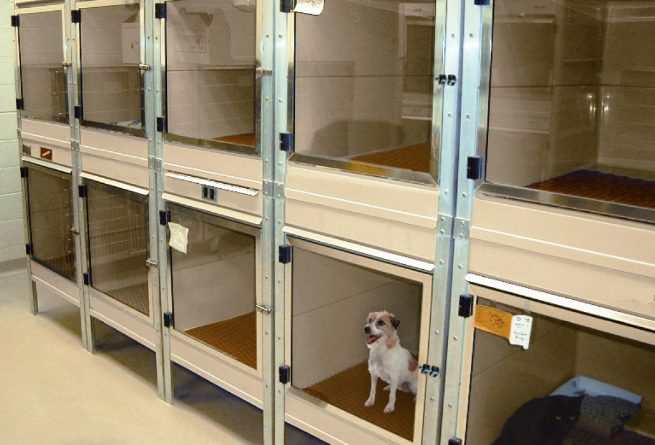
Safe observation means strict physical containment and zero-contact care. The aim is to watch the animal for 10 to 14 days without risking bites, scratches, or saliva exposure to anyone caring for it.
1. Establish containment, immediately after the bite
- Secure enclosure. Place the dog in a heavy-duty, double-latched metal cage, or a solid, lockable room with concrete floors and secure ventilation.
- Perimeter isolation. Position the cage in a quiet, covered area protected from rain and heat, well away from children, visitors, and other animals.
- Escape prevention. Make sure there are no gaps where the dog could squeeze through, or reach its nose or paws out towards anyone walking past.
2. Implement zero-contact feeding and care, for the whole window
- External feeding systems. Fix food and water dishes to the inside of the cage so they can be filled from outside using a hose, funnel, or length of PVC pipe. A double-door feeding hatch or sliding tray works equally well.
- No direct handling. Never reach your hands inside the cage, unleash the dog, or take it out for walks during the observation period.
- Sanitisation. Clean the enclosure floor with a hose from outside the perimeter. Do not enter to clear waste or change bedding by hand.
3. Conduct daily non-contact observation, twice a day from behind a barrier
- Behavioural shifts. Watch for unprovoked aggression, biting at cage bars or dirt, extreme restlessness, abnormal timidness, or sudden lethargy and hiding.
- Neurological and physical signs. Look for heavy drooling, inability to swallow water, a dropped lower jaw, raspy or altered barking, staggering hind legs, or seizures.
- Record keeping. Log food intake, water consumption, and behavioural state morning and evening. Video any unusual movement from a safe distance for veterinary review.
4. Execute emergency protocols if symptoms or death occur
- If rabies symptoms appear. Do not attempt to treat, touch, or handle the dog. Notify the local animal health authority (Dinas Pertanian dan Pangan) immediately, and make sure the bite victim receives or continues VAR and SAR.
- If the dog dies. Do not bury, discard, or burn the body. Contact local veterinary health officers immediately so brain tissue can be safely harvested and transported to a laboratory for definitive testing.
- If the dog is healthy at the end of the window. Transmission is ruled out for that exposure, the victim needs no further rabies treatment, and the dog can be vaccinated.
Part 7. If the dog cannot be found
When a dog vanishes, escapes, or cannot be caught, standard medical protocol in an endemic region treats the incident as a confirmed rabies exposure. Because you cannot observe the animal to rule the virus out, you proceed on the assumption that it was rabid. You cannot afford to wait, search endlessly, or hope the dog reappears.
- Wash the wound exactly as above, 15 minutes under running water with soap or detergent, then antiseptic.
- Start VAR on Day 0 at a designated Rabies Center, and complete every scheduled dose.
- Receive SAR for Category III exposures, infiltrated into and around the wound at the start of treatment.
- Complete the full schedule. Where the dog is observed and survives, the course can be stopped early. Where the dog has vanished, there is nothing to stop it for. Finish it.
Why this cannot wait. The virus travels slowly along peripheral nerves towards the central nervous system. Incubation in humans usually takes one to three months, but can be as short as a few days where the bite is deep or close to the brain. Once the virus reaches the brain and symptoms appear, rabies is virtually always fatal. Post-exposure treatment is virtually 100 per cent effective, but only when it is given before symptoms begin.
Part 8. Reporting
- Notify local health authorities. Report the incident to the treating Puskesmas and to your village officials, the Kepala Desa or Kaling.
- Contact animal health services. Inform the local agricultural and animal health office (Dinas Pertanian dan Pangan). Give the exact location of the bite and a physical description of the dog, so the village rabies teams (Tim Siaga Rabies, TISIRA) can survey the area, warn residents, and monitor for other symptomatic animals.
Reporting is not bureaucracy. In September 2025, a confirmed rabid dog bit 15 climbers on the Batukaru trails at Pujungan in Tabanan, and around 500 dogs in the surrounding area were vaccinated in the emergency response that followed. That response only happens because someone reports.
Part 9. What not to do
- Do not kill the dog. It destroys the only evidence that could have ended your treatment early.
- Do not pack the wound with herbs, oil, coffee grounds, or chilli. Traditional remedies are one of the reasons people die of a preventable disease.
- Do not wait to see whether the dog gets sick before starting the vaccine. Start now. Stop later if the dog stays healthy.
- Do not let the wound be stitched closed before serum is infiltrated.
- Do not stop the course because you feel fine. You will feel fine right up until the point where nothing can be done.
- Do not assume a small scratch is nothing. Category II still requires the full vaccine series.
Part 10. The law underneath all of this
Rabies in Bali is not only a medical protocol. It sits inside a legal framework that almost nobody reads, and that framework matters to both the person bitten and the animal blamed.
The owner’s duties are already written down. Article 5 of Bali Provincial Regulation No. 15 of 2009 on Rabies Control requires the owner of a rabies transmitting animal to attend to its health and welfare, hold a registration card, vaccinate it periodically, hold a vaccination card, and keep the animal inside the house or the house yard. Governor Regulation No. 19 of 2010 governs the movement of those animals. Tabanan Regency added its own Regional Regulation No. 3 of 2016 on Rabies Control, which carries both administrative sanctions and criminal provisions. A dog roaming loose and unvaccinated is not a legal grey area. It is already a breach.
Civil liability follows the keeper, not the animal. Article 1368 of the Civil Code makes the owner or user of an animal answerable for the damage it causes, including where the animal has strayed or escaped supervision. Note the limit: this requires an owner. Where a dog is genuinely ownerless there is no defendant and no civil route, which is precisely why the free vaccine programme and the reporting system exist.
But “stray” is usually the wrong word. Kementerian Pertanian data for Bali found that about 76 per cent of rabies-positive dogs were owned animals that had been let loose, and the same proportion were unvaccinated. The dog that bites you here most often has a household behind it.
Criminal exposure now sits in the new Criminal Code. Law No. 1 of 2023 came into force on 2 January 2026. Article 336(c) makes it an offence to fail to prevent an animal in your keeping from attacking a person or another animal.
And killing the dog carries its own risk. Article 337 of the same law penalises hurting, injuring, or harming the health of an animal beyond reasonable limits or without proper purpose, with a heavier penalty where the animal is left seriously injured or dead. Article 66A of Law No. 41 of 2014 separately prohibits cruelty and misuse of animals. Humane euthanasia carried out by animal health officers on a confirmed or probable rabies case is a different matter and is part of the official response. A private person killing a dog in panic is not automatically covered by that, and if the animal belongs to someone else, destroying it is a separate offence again.

Part 11. Why people still die
Rabies is almost always fatal once clinical symptoms begin. Deaths happen because people underestimate a minor scratch, rely on traditional remedies, delay seeking treatment, or fail to complete the doses. Bali’s own health office puts it plainly: around 99 per cent of the people who died had never been to a health facility.
Killing the biting animal is the most understandable reaction and the most counterproductive one. It prevents the observation that could have ended your treatment on day fourteen. It creates panic in a neighbourhood without producing information. It forces victims through an expensive full course for a dog that may have been perfectly healthy. And it removes the brain tissue that would have given the laboratory a definitive answer. Keeping the animal safely contained and watched for 10 to 14 days answers the question, protects the victim, and does not require anything to be killed.
Rabies is an entirely preventable disease with a clear, accessible, and effectively complete medical solution, provided treatment starts immediately. Bali’s dog vaccination coverage has reached roughly 70 per cent of an estimated 605,000 animals, against a target of a rabies-free island by 2030. The remaining gap is not medical. It is the distance between a bite and a clinic door, and that distance is one decision wide.
Bali does not have a rabies problem. It has a vaccination gap and a reporting gap, and both of them are fixable.
AbyssPaws works at the source: sterilisation, vaccination, and medication for the street dogs nobody counts. Every dog vaccinated is a bite that never becomes an emergency, and a family that never has to find out how any of this works.
If you have been bitten and you are unsure what to do next, or you need help dealing with an owner, a village office, or a hospital, get in touch. If you want to support the work instead, that is on the AbyssPaws page.
Sources
- WHO, rabies vaccines and immunoglobulins position summary, 2018
- WHO, post-exposure prophylaxis recommendations
- WHO, rabies vaccination and immunization: first aid, suturing, and animal observation
- The WHO position on rabies immunization, 2018 updates
- Kementerian Kesehatan RI, One Health implementation against rabies in Bali
- Kemenkes Buku Saku Pengendalian Rabies, vaccine dosing schedule and exposure data
- Dinas Kesehatan Provinsi Bali, 2025 rabies deaths and vaccine stock
- BPBD Bali, rabies case development data
- Perda Bali No. 15 of 2009, Article 5, obligations of animal owners
- Pergub Bali No. 19 of 2010 on the movement of rabies transmitting animals
- Perda Kabupaten Tabanan No. 3 of 2016 on Rabies Control
- Kementerian Pertanian data on rabies-positive dogs in Bali
- Article 336 of Law No. 1 of 2023 on the Criminal Code, failure to prevent an animal attack
- Article 337 of Law No. 1 of 2023 on the Criminal Code, animal cruelty
- Article 66A of Law No. 41 of 2014, prohibition on cruelty and misuse of animals
- Rabies response following the Batukaru incident, Tabanan
- Bali dog vaccination coverage and the 2030 target