
Street dogs Indonesia are covered by laws that are meant to protect animals, and a public that overwhelmingly wants dogs protected. Yet a million dogs a year are still stolen and slaughtered, and the people who do it walk away with a few months at most. This is how stigma, superstition, and unenforced law leave dogs with almost no protection at all.

To understand why street dogs in Indonesia suffer the way they do, you have to start with how they are seen. Long before any dog is hurt, it is first imagined as something less than the animals people are willing to love.
Across much of Indonesia, that image is shaped partly by religion, or more accurately, by how religion is popularly understood. Indonesia is around 87 percent Muslim, and in most schools of Islamic jurisprudence a dog’s saliva is treated as ritually impure, or najis, so that contact requires ritual washing before prayer. That single rule, about cleanliness for worship, has hardened over time into a much broader cultural idea that dogs themselves are dirty, unwanted, or even evil. It is worth being precise here, because the distortion matters. Most scholars hold that it is the saliva, not the dog, that is impure, one major school of Islamic law considers dogs entirely pure, and the tradition is full of commands to treat animals with mercy. The Prophet is remembered for protecting a mother dog and her puppies, and for teaching that a man was forgiven his sins for giving water to a thirsty dog. Cruelty to a dog is not a religious instruction. It is a cultural habit that has borrowed the language of religion. There are Muslims across Indonesia who rescue dogs by the dozen and endure their neighbours’ insults to do it, and Islamic teachers who say openly that a heart which hates a dog for no reason is more impure than any dog.
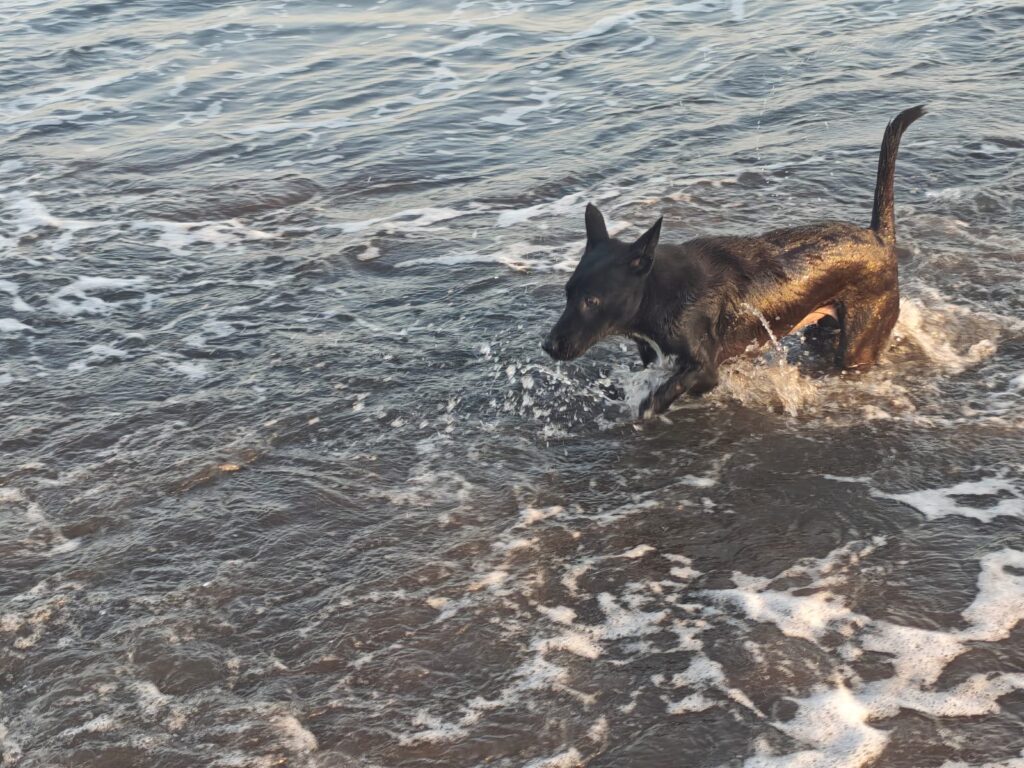
Bali is different again, and this matters, because Bali is where I work. Bali is Hindu, not Muslim, and in Balinese Hindu tradition the dog is not impure at all. It is closer to sacred. Ahimsa, the principle of non-violence toward living things, sits at the centre of the faith, and Balinese spiritual leaders have said plainly that harming dogs or eating them goes against Balinese Hindu belief. Bali’s street dogs are among the oldest and most genetically distinct dog populations on earth, related to the dingo, and they lived alongside the Balinese for centuries. So the cruelty you see here does not come from the island’s religion. It comes from other places: from folk superstition that treats some dogs as the reincarnation of evil spirits or the souls of bad people, from the constant fear of rabies, and from a dog meat trade that was never a native Balinese practice but was brought in by outsiders and allowed to spread.
Once a dog is seen as impure, dangerous, or worthless, everything else follows. Older residents chase dogs with sticks or machetes. A dog that annoys a neighbour can be poisoned without a second thought. When rabies appears, whole neighbourhoods are culled, and people often take the poisoning into their own hands. And underneath all of it runs the trade.

The scale is hard to believe until you sit with the numbers. Animal welfare groups estimate that around one million dogs are killed for meat every year across Indonesia, most of them stolen pets or street dogs snatched at night, bound, packed into sacks with their mouths taped shut, and trucked for hours or days to markets and slaughterhouses. In Bali alone, one long-running welfare organisation has estimated roughly 70,000 dogs eaten each year, and investigators have documented dogs here being killed with cyanide and sold as satay to tourists who have no idea what they are eating, a poison that does not cook away. And this is despite the fact that only a small minority of Indonesians, by repeated national polling somewhere between 4.5 and 7 percent, ever eat dog meat at all. In a 2021 nationwide poll, 93 percent of Indonesians said they support a ban. The trade survives not because the country wants it, but because almost nothing stops it.
Which brings me to the part that troubles me most as someone who works in law. The regulations exist. They are simply not honoured.
On paper, almost every stage of the dog meat trade already breaks a law: theft, transporting animals of unknown disease status across regencies, quarantine and food safety rules, and animal cruelty statutes. Cruelty itself is covered by Article 302 of the old Criminal Code and by the animal husbandry and health law of 2009. The problem is what those laws actually deliver. Under the old Criminal Code, hurting an animal carried a maximum of three months, and even causing lasting injury or death carried a maximum of nine months, with fines still written in colonial-era rupiah that amount to almost nothing today. Indonesia’s new Criminal Code, in force from January 2026, raises this to at most one year, or one and a half years where the animal is seriously harmed or killed, with larger fines. It is an improvement, and it is still light. When a slaughterhouse owner in Central Java who bought and killed thousands of dogs a year was finally convicted, he received twelve months in jail. That was one of only a handful of convictions in all the years since the government declared in 2018 that dogs are not food.
This is the gap that makes cruelty rational. If stealing and slaughtering dogs by the thousand ends, at worst, in a few months inside, and if dog theft is so rarely taken seriously that most thieves are never charged at all, then the punishment is not a deterrent. It is a cost of doing business, and a small one. A person caught once can go back to the same work, or worse, with very little to fear. Lawyers here have a phrase for a rule that exists but is never enforced. They call it a sleeping law. Much of Indonesia’s animal protection is asleep.

None of this is hopeless, and that matters too. Twenty-one cities and regencies have now banned the dog meat trade outright, Jakarta among them. A national Animal Protection and Welfare Bill is under debate, and hundreds of thousands of people have petitioned the President to pass it. The culture is shifting, especially among younger Indonesians, who are keeping dogs as family and refusing to look away.
But shifting is slow, and the dogs are here now. That is why the work on the ground, the feeding, the sterilising, the treating, and the plain refusal to accept that a dog is worth less than any other life, cannot wait for the law to wake up. Every dog we reach is one the system was willing to leave behind.
More about the sterilisation and medication rounds at AbyssPaws.
Sources :
Around one million dogs killed for meat yearly, Bali’s estimated 70,000, and dog theft (Al Jazeera)
Only 4.5 to 7 percent of Indonesians eat dog meat and 93 percent support a ban (FOUR PAWS)
Eating dogs is against Balinese Hindu belief and the principle of ahimsa (Animals International)
Islamic jurisprudence on dogs as najis, alongside the duty of care to animals (Expat Focus)
A niqab-wearing Muslim dog rescuer and an ustadz on hatred of dogs
Bali’s ancient street dogs, and rabies since 2008 with over 150 deaths (sociocultural study, PMC)
Slaughterhouse owner sentenced to 12 months, one of few convictions since 2018 (FOUR PAWS)
🐾 Help make this real. AbyssPaws funds sterilisation and rabies vaccination for street and community dogs across Bali, dog by dog, with full transparency. If this article moved you, the best thing you can do is share it. And if you’re able to give, every rupiah goes straight to dogs no one else is paying for. → See how to support AbyssPaws
Leave a Reply