
Author: Bernaded Craill

  • Why the Job Market Feels Broken

    Why the Job Market Feels Broken

    You did everything right. The degree, the skills, the polished CV, and still nothing but silence, rejection emails, and application portals that swallow your effort whole. It isn’t you. The rules changed, and nobody updated the playbook. Here’s the raw mechanics of the broken job market, and how hiring actually works now, from someone who spent years on the other side of the desk. → Read the full article

    Something has quietly collapsed, and most people are still being told to fix it with a better resume.

    The truth is harder than that. The job market isn’t just competitive anymore. It’s structurally broken for both sides. Candidates are trapped in an endless loop of ghosting, rejection letters, and black-hole application portals. Meanwhile, hiring managers are drowning in thousands of AI-padded resumes, desperate to find one reliable person who can actually do the job and get along with the team.

    It feels like a high-stakes lottery where the rules change daily, hard work no longer guarantees anything, and the finish line keeps moving. Let me explain why.

    The Three Cracks in the Foundation

    The skills mismatch. Universities are still preparing students for roles that are being automated. The method of learning has barely changed since the 1600s, and the institution is more obsessed with title and prestige than with real education that actually improves human lives. The result is a surplus of graduates trained for a world that no longer needs them. Across advanced economies the numbers are brutal: in the United States, more than four in ten recent graduates are underemployed, working jobs that don’t require the degree they went into debt for. The International Labour Organization warns that worldwide, progress toward decent work has stalled and young people are being squeezed hardest of all. That is not an accident. It’s the system working exactly as it was built to, just for a world that no longer exists.

    team learning new skills to survive the broken job market

    The “entry-level” trap. Automated screening software and inflated employer demands have made the first rung of the ladder almost impossible to reach. Job descriptions now routinely ask a 22-year-old to demonstrate the judgment of a 35-year-old. Analysts are calling it “seniorization.” You need the job to get the job. It’s an artificial bottleneck, and it’s crushing an entire generation.

    The content gap. The highly visible fields everyone chases, corporate tech and media, are oversaturated, while massive, high-paying sectors quietly starve for workers. And nobody in academia is criticizing this hard enough. The gap between the number of people on this earth and the number of meaningful jobs available isn’t close. It’s a canyon.

    Where the Real Jobs Actually Are

    The work that survives is the work a machine can’t download:

    • High-touch human empathy. Healthcare, therapy, mental health support, specialized teaching.
    • The physical and skilled trades. Electrical, plumbing, green-energy installation, advanced manufacturing. You cannot download a physical repair. And the shortage is global: in 2026, roughly 72% of employers worldwide said they couldn’t find the skilled workers they need, close to a record high, with skilled trades and engineering among the hardest roles of all to fill.
    • Complex problem-solving. Systems engineering, cybersecurity, data ethics, and directing AI tools rather than being replaced by them.
    • The creative-strategic blend. High-level negotiation, crisis management, hyper-local community building

    The Playbook Everyone Gives You Is Dead

    “Get a degree, get a job” is over. The advice that still works looks different:

    • Become a polymath. Combine two unrelated skills, coding plus agriculture, or design plus psychology, and you drastically cut your competition.
    • Prioritize durable skills. Adaptability, communication, emotional intelligence. These never expire.
    • Build a public portfolio. Show what you can do, not just what you studied. Side projects and public creation prove value faster than any resume.
    • Look outside the capitals. Remote work and regional development mean the best opportunities are increasingly outside the oversaturated mega-cities.
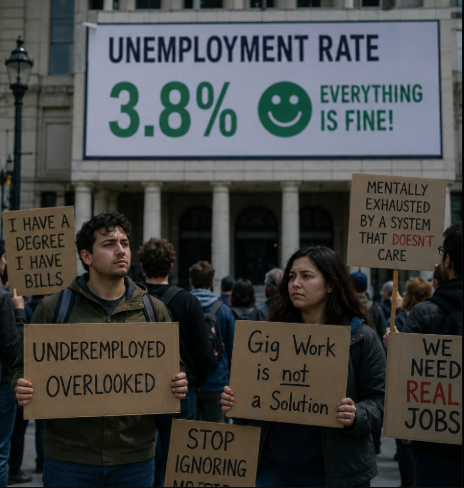
    woman holding a need a job sign in the broken job market

    And yet, imagine having all these skills and still getting nothing. Because here’s the part the LinkedIn gurus won’t tell you.

    The Reality of the Broken Job Market

    From my years in management and human resources, I’ll give you the raw truth: on paper, qualifications get you through the door, but “culture fit” and chemistry are what actually land the job. The best resume in the world means nothing if the manager thinks, “I don’t want to sit in a room with this person for eight hours a day.”

    Tragic, isn’t it? Let’s look at this bottleneck through the HR lens:

    The nepotism and network reality. Because managers care so much about fit, they prefer warm introductions. A large share of jobs are filled before they’re ever posted publicly, widely estimated at 70 to 80%, leaving standard applicants fighting over scraps. Referral hires convert at a dramatically higher rate than anyone applying cold through a portal.

    The saturation wave. When tech boomed, everyone learned to code, and now entry-level tech is flooded. If everyone stampedes into trades or healthcare next, those gates will tighten too.

    The likability filter. Technical skill is treated as a baseline, not a differentiator. The final decision almost always comes down to human dynamics and team fit.

    How Humans Actually Get Hired Now

    Elite credentials and “wow” experiences are losing their currency. The real strategy is navigating the human element:

    • Target the hidden market. Posting a job online now returns thousands of AI-generated resumes. One large insurer reportedly received 100,000 applications for just 1,400 roles, and recruiters describe jobs pulling over a thousand applicants within minutes of going live. Companies hate their own public hiring process. Landing a job increasingly means bypassing the portal entirely through direct, peer-to-peer networking.
    • Prove fit before the interview. Show you understand the team’s specific culture and pain points before you ever sit down. Research the team dynamic, not just the company name.
    • Go micro-niche. Instead of drowning in massive talent pools, the survivors find hyper-specific micro-industries where the candidate pool is naturally small. Easier to stand out, easier to fit.

    professionals networking, showing how the broken job market really hires

    Yes, it’s an absolute nightmare. No sugarcoat. Just the truth.

    And Governments Are Asleep at the Wheel

    Here’s what makes it worse: most governments are completely unprepared, using a 20th-century playbook against a 21st-century crisis. They point at low unemployment statistics and declare everything fine, ignoring the underemployment, the gig-economy desperation, and the psychological grind of the modern job hunt.

    The problem is political time. Politicians think in election cycles of four or five years. The structural collapse of the job market is a ten-to-twenty-year problem. Long-term planning is expensive, so governments reach for temporary band-aids instead.

    But if a government actually wanted to face this honestly, a real solution would look like this:

    1. Break the university degree monopoly. Stop funding and glorifying three-to-four-year degrees as the default path to survival. Shift public money toward modular, three-to-six-month technical and behavioral certifications. Stop subsidizing institutions that pump thousands of graduates into fields with zero market demand.

    2. Legislate and regulate AI hiring. We heavily regulate financial markets and physical safety, yet we let algorithmic black boxes decide who gets to eat. Penalize automated screening that rejects candidates on arbitrary keyword matches. Force human-centric, auditable hiring so qualified people aren’t filtered out by a machine before a human ever sees them. The evidence is damning. In one major Harvard Business School study, 88% of employers admitted their own systems screen out qualified candidates, and in the United States alone an estimated 27 million capable “hidden workers” are locked out of the market entirely.

    3. Incentivize micro-businesses and subsidize “fit” apprenticeships. As big corporations shrink their human footprint, make it cheap for small teams to form. Give real tax breaks to companies under 20 people to hire and train for attitude and fit, not just credentials. Subsidize apprentice salaries for the first six months so small businesses can take a chance on someone with the right character but no “wow” resume.

    remote worker outside the city in the broken job market

    4. Implement a UBI or job guarantee. As automation and saturation deepen, there simply won’t be enough traditional 40-hour jobs for the global population. The World Economic Forum projects tens of millions of roles displaced by the end of the decade, even as tens of millions of new ones emerge. Sever the link between basic survival and corporate employment through a baseline income funded by taxing automated corporate productivity. Give people breathing room to fail, retrain, or work part-time without facing immediate homelessness.

    The Real Question

    None of this is impossible. The mechanics are understood. The data is public. The solutions are on the table.

    But the real question about this broken job market isn’t can they fix it. It’s whether they’ll even care to try, for their own people.

    SOURCES:


  • Bali Street Dogs: The Law Says Protect, Reality Says Otherwise

    Bali Street Dogs: The Law Says Protect, Reality Says Otherwise

    Under Indonesian law, protecting Bali street dogs is not a favour the government does when it feels generous. It is a legal obligation, a shared responsibility between central authorities, regional governments, and civil society, written into Law Number 41 of 2014 on Animal Husbandry and Animal Health. On paper, Bali has some of the most progressive animal-welfare commitments in the country. In practice, the dogs on the street tell a different story.

    This is the gap between what the law promises and what actually happens on the ground, and it is the gap that groups like AbyssPaws exist to fill.

    What the Law Actually Requires

    Bali’s obligations toward its estimated 500,000 to 600,000 roaming dogs are not vague. They are specific, and they sit on four clear legal and practical fronts.

    Mandatory mass vaccination. The government’s primary legal duty is disease control to protect public health. Bali has publicly committed to becoming rabies-free by 2028, and to get there, local agriculture and health services are obligated to run free, island-wide anti-rabies vaccination drives reaching at least 70% of the dog population, the threshold scientists say is needed for herd immunity.

    A ban on the dog meat trade. In a genuinely historic move, the Bali Governor enacted Regional Regulation Number 5 of 2023, which officially bans the trade and distribution of dog meat across the province, the first regulation of its kind in Indonesia. Violations are a criminal offence carrying up to three months’ imprisonment and heavy fines.

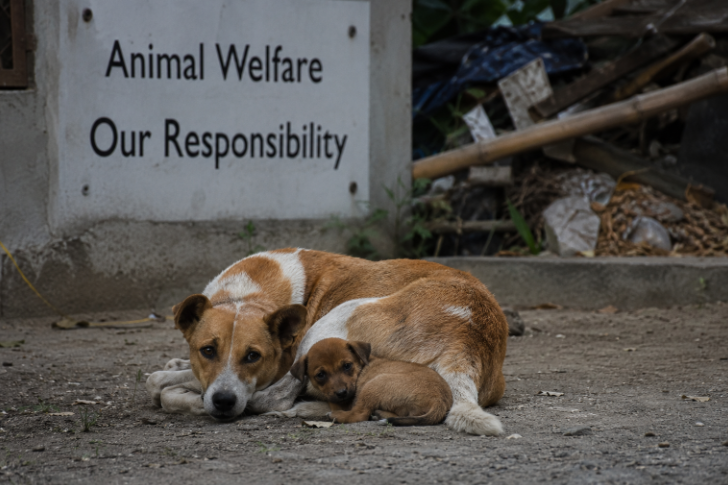
    Bali street dog waiting for rescue and sterilisation

    Protection of the native Bali Dog. To guard the genetic purity of the indigenous Bali Dog, one of the world’s oldest pristine dog populations, and to block imported disease, the government enforces strict quarantine and entry laws that make it illegal to bring outside dogs onto the island.

    Enforcing owner responsibility. The government itself acknowledges that many “stray” dogs actually belong to village compounds but are left to roam. Under regional rabies bylaws, authorities are obligated to enforce rules requiring owners to confine and vaccinate their animals.

    Read together, this is a serious framework. A government following it would be vaccinating relentlessly, funding the shelters and sterilisation programs that keep populations stable, and treating culling as the failed policy the science has already proven it to be.

    Where the Promise Breaks

    Here is the problem. While the government manages the high-level logistics of mass vaccination and health regulation, it provides very little funding or infrastructure for the parts that actually keep Bali street dogs alive and populations under control: shelters, rescue, sterilisation, and rehabilitation. That work is left almost entirely to independent non-profits.

    And when outbreaks flare and political pressure rises, the temptation to reach for the oldest, crudest tool returns: the indiscriminate cull.

    The tragedy is that the government already knows this does not work. Bali’s own rabies history is a documented lesson in it. After the 2008 outbreak, authorities leaned on mass culling by strychnine poisoning; a practice condemned worldwide. It failed. It was only when the strategy shifted toward comprehensive vaccination, and free-roaming dogs were recognised as part of the solution rather than the enemy, that human rabies cases finally began to fall. Even the Food and Agriculture Organization has documented this paradigm shift on Bali directly.

    So when culling returns, it is not a policy gap born of ignorance. It is a choice to ignore what is already known.

    Bali street dog after vaccination

    Why the Cull Backfires; Every Time

    Global health authorities, including the World Health Organization and the FAO, have proven definitively that indiscriminate culling does not eliminate rabies and actually makes outbreaks worse. When a government takes this shortcut, the damage lands in four places at once.

    It destroys herd immunity; the “vaccine vacuum.” Street catchers easily capture the friendly, healthy, already-vaccinated dogs. The truly fearful or rabid ones run and hide. Removing vaccinated dogs from a neighbourhood leaves behind a resource vacuum; food waste, shelter, empty territory; that unvaccinated, potentially rabid dogs from other areas rush in to fill and breed. The cull doesn’t stop rabies. It accelerates it.

    It damages tourism. Bali’s economy depends on its reputation as a peaceful paradise. When graphic footage of dog culls reaches international media, it triggers global outrage. Organisations like PETA and World Animal Protection have launched campaigns urging tourists to boycott the island, and many compassionate travellers quietly avoid destinations known for cruel, indiscriminate slaughter.

    It erodes a unique heritage breed. The Bali Dog is genetically distinct and ancient, one of the oldest pristine dog populations on earth. Indiscriminate culling pushes this indigenous breed closer to extinction, destroying a living piece of Bali’s bio-cultural heritage for a short-term political cosmetic that doesn’t even work.

    rescued Bali dog recovering

    It violates local culture and religion. Balinese life is rooted in Tri Hita Karana, the philosophy of harmony between humans, the divine, and nature, animals included. Dogs hold a real place in Balinese spiritual life, often seen as guardians. Forcing communities and village leaders to permit the slaughter of neighbourhood dogs inflicts genuine moral distress and cuts against indigenous spiritual values.

    The Gap We Work In for Bali Street Dogs

    When a government neglects its duty to vaccinate and chooses to kill instead, the rabies virus wins. The dog population becomes unstable, human deaths tend to rise, tourism revenue falls, and local non-profits are left to pick up the pieces of a fractured community.

    That is the gap AbyssPaws works in. Not because it should be our job alone; the law is clear that it is a shared responsibility, but because someone has to do the vaccinating, sterilising, and rescuing that eeps these Bali street dogs alive while the promise on paper waits to be kept.

    Source:

    The Indonesian Veterinary Association on the shift to observation and humane euthanasia – PDHI Bali

    Law Number 41 of 2014 and the shared responsibility for animal welfare – Kompas

    Bali’s target of becoming rabies-free by 2028 – Bali International Hospital

    Indonesia’s 70% vaccination coverage target for herd immunity – Food and Agriculture Organization (FAO)

    Bali Regional Regulation Number 5 of 2023 banning the dog meat trade – Sintesia Animalia Indonesia

    Strict animal quarantine and entry laws protecting the Bali Dog – Merusaka

    How Bali shifted from culling to vaccination, and why free-roaming dogs became key to rabies control – FAO One Health

    International condemnation of dog culling in Bali – World Animal Protection

    PETA’s response to Bali’s dog-killing campaigns – The World

    🐾 Help make this real. AbyssPaws funds sterilisation and rabies vaccination for street and community dogs across Bali, dog by dog, with full transparency. If this article moved you, the best thing you can do is share it. And if you’re able to give, every rupiah goes straight to dogs no one else is paying for. → See how to support AbyssPaws


  • The Cheapest Dog in Bali Is the Oldest Dog on Earth

    The Cheapest Dog in Bali Is the Oldest Dog on Earth

    There is a Bali heritage dog sleeping in a gutter in Tabanan right now that carries more genetic history than every pedigree champion in Jakarta combined.

    Nobody wants her. She is brown, medium-sized, has a slightly crooked ear and a tail that curls the wrong way. She is worth nothing. If you tried to give her away, people would ask what breed she is, and when you said anjing kampung, the conversation would end.

    Two kilometres away, someone is paying eight million rupiah for a puppy that cannot breathe properly.

    I want to explain, carefully and with evidence, exactly how backwards this is.

    What the science says about the Bali heritage dog

    Between 2000 and 2003, DNA samples were taken from three thousand indigenous dogs across Bali and analysed at the Veterinary Genetics Laboratory at UC Davis in California.

    The results were not subtle.

    The published microsatellite study found the Bali street dog to be the most genetically heterogeneous population in the comparison, carrying 239 of the 366 total alleles observed across all groups tested, including twenty-eight American Kennel Club breeds and the Australian dingo. Thirteen alleles appeared only in the Bali dog. The conclusion drawn was that a viable, diverse dog population existed on this island before its geographic isolation roughly twelve thousand years ago, and has stayed largely untouched by European breeds since.

    Dr Ben Sacks of UC Davis has described the modern dog as emerging in Southeast Asia around seven thousand years ago, spreading outward and eventually giving rise to the Kintamani, the chow chow, the Akita, the saluki, the basenji. The Bali heritage dog has been breeding true here for at least 2,500 years.

    Read that again. The pedigree breeds people queue up to buy are, in a real sense, descendants of the dog nobody wants.

    bali heritage dog playing

    The scorned village dog is not a mongrel. She is the original.

    What “cute” costs

    Now look at what the money buys instead.

    A 2017 analysis of insurance claims by the American insurer Nationwide found that flat-faced breeds faced more than a 100% increase in the likelihood of claims for corneal ulcers and eye trauma, over 80% more for skin cancer and fungal skin disease, and more than 100% more for pneumonia and heat stroke.

    Brachycephalic obstructive airway syndrome, the condition where a dog’s skull has been selectively shortened until the airway no longer fits inside it, produces exercise intolerance, heat intolerance, sleep disruption, and respiratory distress ranging from mild to fatal. The Netherlands and Norway have introduced legal restrictions on breeding these dogs. Some veterinarians now argue the welfare of several popular breeds is too compromised to justify continuing to breed them at all.

    In a tropical climate. On an island that sits three hundred kilometres from the equator.

    People are importing dogs that cannot cool themselves, into a place where the heat index regularly exceeds thirty-five degrees, because the face looks like a baby’s.

    That is not love. That is shopping.

    Where the puppies come from

    A 2026 investigation by Lady Freethinker and the Jakarta Animal Aid Network mapped a rapidly expanding network of unregulated puppy mills across Indonesia, concentrated in West and Central Java. Dogs crammed into overcrowded cages. No veterinary care. Females bred repeatedly with no recovery. Puppies sold unvaccinated, carrying the risk of parvovirus, distemper and rabies into people’s homes.

    Most of those sales now happen through TikTok, Tokopedia and Shopee. Buyers almost never see the conditions. Breeders refuse property access and bring the dogs out one at a time, which tells you everything about what is behind the gate.

    An earlier PETA Asia investigation of five Indonesian breeding facilities documented dogs standing on bare wire mesh that cut into their paws, enclosures reduced to roughly a square metre, and breeders physically holding two pugs together to force mating. All of it legal.

    And the part that should end the argument permanently: when these operations stop being profitable, investigators heard reports of the surplus dogs being sold into the meat trade.

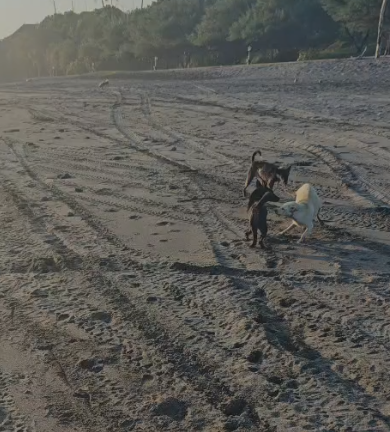
    bali heritage dog playing at the beach

    So the pedigree puppy in the shop window and the dog in the cage at the market are not opposites. They are two ends of the same supply chain.

    The killing

    Bali was rabies-free until 2008, when the virus arrived from Flores.

    The government’s response, beginning that December, was culling, strychnine-laced baits and blow darts, deployed across Denpasar and Badung. Strychnine does not kill quickly. It kills through hours of convulsions.

    By some counts around two hundred thousand dogs were killed. It did not stop the outbreak. By September 2010 rabies had been confirmed in over 30% of Bali’s villages.

    What did work was vaccination. World Animal Protection reports that its 2010 programme vaccinated 210,000 dogs and produced a 35% drop in human rabies deaths and a 76% drop in rabies in dogs.

    The evidence was in hand fifteen years ago. Culling still returns whenever there is a scare.

    BAWA estimates the free-ranging indigenous Bali dog population has fallen from around 800,000 to roughly 20,000.

    We are not managing a nuisance. We are erasing a twelve-thousand-year-old lineage, and we are doing it with poison, because we decided it was ugly.

    The actual mechanism

    Here is what is happening underneath all of it, stated plainly.

    The dog’s value is not being assessed. It is being signalled.

    A purebred dog with papers and a price tag communicates something about the person holding the leash; money, taste, arrival, modernity. The dog is a wearable object. The price is the point; if the dog were free, it would not perform the function.

    The village dog fails at this completely. Not because she is less healthy, less intelligent, less loyal or less beautiful, on every measurable axis she outperforms, but because she cannot be shown off. She is what you get when you don’t have money. So she reads as poverty, and people move away from her the way they move away from anything that might stick to them.

    This is why “she’s a stray” is said in the tone it’s said in. It was never a description of the dog. It was a description of the owner.

    And the cruelty of it is circular: the dogs are neglected because they’re considered worthless, and then their neglected condition, the mange, the thinness, the fear, is offered as proof that they were worthless all along.

    What adoption actually is

    Not charity. Not settling. Not the sad option.

    You are taking home an animal with a functioning skull, a working nose, a normal palate, hybrid vigour instead of accumulated recessive disease, and a nervous system shaped by 2,500 years of living alongside humans on this exact island in this exact climate.

    bali heritage dog sleeping and save in a house

    You are also removing one unit of demand from a supply chain that ends in a wire cage in Java, and adding one to a population that vaccination programmes can actually reach.

    You are not rescuing her. She is, statistically and genetically, the better dog. You’re just the one who noticed.

    The honest part

    I am tired.

    I am tired of explaining that a dog’s worth is not printed on a receipt. Tired of watching people step over an animal with an eight-thousand-year pedigree to go and buy something that will need surgery to breathe. Tired of the ones I couldn’t reach in time, and of knowing exactly how the next scare will go, and of the specific silence that follows when you tell someone their dog was never a mongrel.

    There is no clean ending to this. The awareness isn’t coming on its own. It arrives one person at a time, usually because one dog got close enough to be seen properly.

    So: don’t buy. Adopt. Sterilise. Vaccinate. And when someone tells you the village dog is nothing special, you now know enough to tell them what she actually is.

    She was here first. She’ll be here after. She deserves better than the reception she gets on her own island.

    More about the sterilisation and medication rounds at AbyssPaws.

    Sources

    Dog Meat Free Indonesia on extreme markets — the coalition’s position on live animal markets and the legal framework around them.

    Genetic variation analysis of the Bali street dog using microsatellites — the UC Davis microsatellite study on allelic diversity, heterozygosity and the Bali dog’s relationship to the dingo, Akita and Chow Chow.

    BAWA’s Bali Heritage Dog campaign — background on the indigenous Bali dog, the DNA sampling programme, and the breed’s role in Balinese cultural life.

    The Last Bali Heritage Dog — Cat Wheeler — Dr Ben Sacks of UC Davis on the Southeast Asian origin of the modern dog and the Bali dog’s scientific value.

    Indigenous Bali Dogs on Brink of Extinction — DogTime — BAWA’s population estimates and the effect of culling and interbreeding on the heritage dog.

    Response to a Rabies Epidemic, Bali, Indonesia, 2008–2011 — CDC Emerging Infectious Diseases — the official epidemiological account of the outbreak, the culling method, and the failure of the emergency response.

    World Animal Protection’s response to dog culling in Bali — vaccination outcome figures and the case against culling as a rabies strategy.

    Killing 200,000 Dogs Doesn’t Halt Rabies in Bali — CBS News — contemporaneous reporting on the scale of the cull and the vaccine shortages that followed.

    Lady Freethinker and JAAN investigation into Indonesia’s expanding puppy mill industry — conditions inside backyard breeding operations, online sales channels, and the link to the meat trade.

    PETA Asia’s investigation of Indonesian puppy-breeding facilities — documented conditions at five breeding facilities supplying pet shops in Jakarta.

    Unravelling the health status of brachycephalic dogs — Nature Scientific Reports — peer-reviewed evidence on conformation-related disease in flat-faced breeds.

    Consequences and Management of Canine Brachycephaly in Veterinary Practice — veterinary perspectives on extreme morphology as a systemic welfare problem.

    Dermatological Problems of Brachycephalic Dogs — on BOAS, associated non-respiratory disorders, and the breeding restrictions introduced in the Netherlands and Norway.

    The Evolution of Petface — Smithsonian Magazine — the Nationwide insurance claims analysis and the history of how breed standards produced inherited disease.

    10 brachycephalic dog breeds and their health issues — Humane World for Animals — plain-language summary of the conditions these breeds live with.

    The facts on Indonesia’s dog meat trade — Humane World for Animals — consumption figures, rabies risk, and the status of the Animal Protection and Welfare Bill.


  • The Machine That Runs on Nothing

    The Machine That Runs on Nothing

    There is a particular kind of lie that does not need to be true to work. It only needs to be repeated by the right people, at the right volume, against the right nerve. Feed it enough repetition and it stops behaving like a claim and starts behaving like a fact, not because anyone proved it, but because everyone around you seems to believe it, and your brain, ancient and social and terrified of being the odd one out, quietly rewrites itself to match the room.

    We like to think we believe things because they are true. We do not. We believe things because they are ours, because our side holds them, because doubting them would cost us the people we belong to. That single crack in human nature is the whole doorway. Give a capable operator that one weakness, add a few hundred coordinated accounts to fake the sound of a crowd, and you can march an entire population into certainty about something that was never real. The substance is optional. The certainty is the product. And the product sells.

    Indonesia has been running a live experiment in this for over a decade, and its cleanest specimen has a name: the diploma.

    The Jokowi diploma hoax did not come from evidence. It came from anonymous accounts in April 2014, in the middle of a presidential campaign, circulating photocopies and pointing at a name spelling and a serial number. By July, leaflets were being handed around Solo and Jakarta days before the vote. The university denied it immediately. That should have been the end of it in 2014.

    Instead, it came back. It returned in 2019 for the next election, against a different opponent, wearing the same clothes. It escalated into a courtroom in October 2022, when the author of Jokowi Undercover filed a civil suit, only to withdraw it after he was arrested on separate hate speech charges. And it rose again after that, until it was finally tested the hard way: dozens of witnesses, forensic laboratory analysis of the documents, university records, classmates, the people who signed them. In 2025 the investigation closed. No forgery. No crime.

    Look at that shape. Not a rumour that flared and died, but one that hibernates and returns on schedule, every time it becomes politically useful. Ten years. Three election cycles. Denied by the university, abandoned in court, and dismantled by a forensic laboratory, and still it walks. That is not doubt. Doubt dies when the evidence arrives. This is something built to survive evidence, because it was never made of evidence in the first place.

    And it did what these things always do. It found people who were already angry and handed their anger a target. That is the thing nobody wants to admit about themselves: the belief came first. The proof was reverse engineered later, assembled backwards from a conclusion people had already decided to feel. A letter in a name. A serial number. The kerning of a font. Ear shapes in a graduation photo. Grown adults turned into amateur forensic examiners overnight, not because they found something, but because they needed the thing they already believed to be findable.

    Jokowi the 7th Indonesia President

    And when the finding of no crime finally landed, it did not land at all. It was absorbed as further proof of the cover up. Watch that move closely, because it is the fingerprint of manufactured belief: every rebuttal becomes evidence of the conspiracy, every calm clarification from the university becomes part of the plan, and the story, refusing to die, quietly relocates to the next allegation. Honest doubt updates when the evidence arrives. Manufactured doubt just moves house.

    And here is where it stops being about a diploma at all.

    Because the same wiring that spreads the lie also makes it cruel. The screen strips the ordinary person of the face they wear in real life, the neighbour, the civil servant, the polite stranger, and hands them a mob to disappear into, where nobody is responsible because everyone is. The target stops being an argument and becomes a hunt. It moves off the document and onto the man, then off the man and onto his children, his family, his circle, because the point was never the diploma. The point was the permission to attack.

    And most of them believe they will never pay for it. This is the quiet lie inside the loud one: that the locked profile, the fake name, the buzzer account, make a person untouchable. It is not true. The cruelty is documented. It is legally actionable. The law that could reach it exists. Yet the worst of it still goes unpunished, not because the law is absent, but because it is outrun, engineered around by people who built their anonymity for exactly this reason. There is a machinery of hiding, and it is as deliberate as the machinery of attack.

    Above all of it sits the part almost no one wants to say out loud, because it implicates something bigger than any buzzer. The platforms see this. They have always seen it. They hold every tool required to slow it, and they choose not to, because the rage is not a malfunction of the system. The rage is the business model. Outrage travels farther, holds attention longer, and sells more than any calm truth ever could, so the machine that destroys a stranger is the same machine that prints the platform’s revenue. It is not that they fail to stop it. It is that they have no reason to.

    If any of this feels familiar, it should. This exact engine has bolted itself onto different faces in different countries, obeying the same physics every time: find a figure who threatens someone’s sense of us, and it stops mattering what that figure actually did. The outrage arrives first and goes looking for its reason afterward. I wrote about a version of this engine wearing an American face. This is the version wearing an Indonesian one. Peel off either mask and the machine underneath is identical, and it is already warming up for whoever is next.

    Now the part almost nobody is willing to sit with.

    The machine does not run on evil. It runs on you. On the most ordinary, most human instincts you own, the need to belong, the pull of the crowd, the exhaustion that makes you scroll instead of check, the quiet relief of letting the group think for you. These are not defects in bad people. They are standard equipment in all of us, and that is exactly why they can be harvested at industrial scale by anyone with the skill and the numbers to do it. You are not safe because you are intelligent. The intelligent are often easier prey, because they are so much better at building sophisticated reasons for what they had already decided to feel.

    So the question worth your attention is not whether the diploma was real. That one is answered, and answered dully, in a closed police file. The question that outlives Jokowi, and Ahok before him, and the name none of us have heard yet, is the one that should make the back of your neck cold:

    Why does a lie with nothing inside it defeat a truth with everything?

    That is the subject. Not one man’s diploma, but the engine beneath it. How it is built. Who profits from turning your outrage into their income. Why your own mind hands it the keys and thanks it afterward. How a disagreement curdles into a hunt, how a hunt becomes a crime, and how a society drowning in manufactured noise slowly stops believing that truth is even worth reaching for. That is what the Jokowi diploma hoax was really built to do.

    I am taking the whole machine apart, piece by piece, and laying the parts on the table with their real names attached.

    This was only the sound of it turning over.

    The full teardown is coming soon, as a mini book, in the AbyssDome Store.

    Sources:

    Kompas – Cerita di Balik SP3 untuk Eggi Sudjana dan Damai Lubis di Kasus Ijazah Palsu Jokowi

    Detik – Polisi Resmi Terbitkan SP3 Rismon Sianipar di Kasus Ijazah Jokowi

    ANTARA – Polda Metro Hentikan Kasus Tiga Tersangka Laporan Ijazah Palsu Jokowi


  • Feeding a Street Dog Is Not a Crime: What Indonesian Law Actually Says

    Feeding a Street Dog Is Not a Crime: What Indonesian Law Actually Says

    A graphic has been circulating claiming that feeding or rescuing Bali’s street dogs could get you “processed by law.” We looked at what Indonesian law actually says. The short version: there is no feeding street dogs Bali law, and the statutes that do exist are written to protect these dogs, not to punish the people who care for them. Here is the full picture, with the articles named, and where you can help.

    A message has been making the rounds on social media in Bali. It carries the face of a former politician and the warning that feeding or caring for street dogs will be “processed by law,” that activists will be reported, and that foreigners could be deported. It is designed to frighten the very people who keep these animals alive. So let us be calm and precise about it, because fear travels faster than fact, and the fact is reassuring.

    Now the real question, the one worth asking out loud: under which article, exactly, would a person who feeds or rescues a street dog be breaking the law? The answer is that there is none. No provision in the Indonesian criminal code, and no provision in the animal husbandry and health laws, makes feeding, sheltering, sterilizing, or rescuing a stray dog an offence. The page is blank because the law is silent. There is nothing there to enforce.

    Circulating graphic falsely claiming a feeding street dogs Bali law exists

    What the law does say points in the opposite direction. Under the new Criminal Code that came into force this year, the articles on animals sit under the heading of cruelty and neglect, and they punish the person who hurts, injures, or kills an animal without lawful reason. Older and still relevant, the Animal Husbandry and Health Law requires that animals be kept free from pain, fear, and distress, and it expressly names the community, alongside the central and regional governments, as sharing the responsibility for animal welfare. Read that again. The law names ordinary citizens as part of the solution. A rescuer is not standing against the state’s goals. A rescuer is doing precisely what the statute asks of her.

    Start with authority. A recommendation from a member, or former member, of the DPD is not a law. The DPD’s constitutional role is to offer considerations and recommendations. It cannot create criminal offences. Only laws passed through the proper legislative process can do that. And the individual pictured in that graphic was permanently removed from the DPD back in 2024, a status confirmed by constitutional law experts at the time. A recommendation to a ministry criminalizes nothing. It never could.

    There is also the matter of rabies, which is the reason usually given for these threats. The recognized path to a rabies-free Bali runs through vaccination and sterilization, which is exactly the work donor-funded programs like AbyssPaws carry out. Indiscriminate culling is not only cruel, it is the approach that risks colliding with the cruelty provisions of the very same Criminal Code. Compassion and public health are not in tension here. They are the same road.

    So if anyone ever arrives with the claim that caring for these dogs is illegal, the reply is simple and can be given without raising your voice. Name the article. There isn’t one. Meanwhile, the people who love these animals are on the side the law was written to protect.

    We will keep feeding them. We will keep healing them. And we will keep doing it in the open, with full transparency, because we have nothing to hide and every reason to be proud.

    If this moved you, you can turn it into medicine and sterilizations. AbyssPaws now has a verified fundraising page for the sterilization and medical care of street dogs in the remote corners of Bali. Every contribution goes toward the vaccinations and spaying that actually make Bali safer, for the dogs and for people. You can donate, and share the link, here: kitabisa.com/campaign/abysspaws

    Please note: the Kitabisa fundraising link is only active for a limited period, in line with the platform’s own campaign rules. If the link has closed by the time you reach it, you can find our current donation channels and everything else on our main hub at linktr.ee/bernadedcraill.

    More about the sterilisation and medication rounds at AbyssPaws.

    Detik: Ahli Hukum Unud — Status Arya Wedakarna Mantan Anggota DPD — confirming the removal from the DPD stands

    Hukumonline: Penyiksaan Terhadap Hewan, Adakah Hukumnya? — on Pasal 302 KUHP lama and Pasal 337 UU 1/2023, plus Pasal 66A UU 41/2014

    Inspirensis: Pasal Pidana Hewan dalam KUHP Baru (UU No. 1 Tahun 2023) — on the new Criminal Code articles 336 to 338

    IJRS: Apakah Menyiksa Hewan Bisa Kena Hukuman Pidana? — overview of animal protection law and the five freedoms under PP 95/2012


  • Hated, Stolen, and Unprotected: The Reality of Dogs in Bali and Across Indonesia

    Hated, Stolen, and Unprotected: The Reality of Dogs in Bali and Across Indonesia

    Street dogs Indonesia are covered by laws that are meant to protect animals, and a public that overwhelmingly wants dogs protected. Yet a million dogs a year are still stolen and slaughtered, and the people who do it walk away with a few months at most. This is how stigma, superstition, and unenforced law leave dogs with almost no protection at all.

    Our adopted dogs, Cookie and Sugar, playing with street dogs Indonesia on a beach in Bali

    To understand why street dogs in Indonesia suffer the way they do, you have to start with how they are seen. Long before any dog is hurt, it is first imagined as something less than the animals people are willing to love.

    Across much of Indonesia, that image is shaped partly by religion, or more accurately, by how religion is popularly understood. Indonesia is around 87 percent Muslim, and in most schools of Islamic jurisprudence a dog’s saliva is treated as ritually impure, or najis, so that contact requires ritual washing before prayer. That single rule, about cleanliness for worship, has hardened over time into a much broader cultural idea that dogs themselves are dirty, unwanted, or even evil. It is worth being precise here, because the distortion matters. Most scholars hold that it is the saliva, not the dog, that is impure, one major school of Islamic law considers dogs entirely pure, and the tradition is full of commands to treat animals with mercy. The Prophet is remembered for protecting a mother dog and her puppies, and for teaching that a man was forgiven his sins for giving water to a thirsty dog. Cruelty to a dog is not a religious instruction. It is a cultural habit that has borrowed the language of religion. There are Muslims across Indonesia who rescue dogs by the dozen and endure their neighbours’ insults to do it, and Islamic teachers who say openly that a heart which hates a dog for no reason is more impure than any dog.

    Lily, born with a defect and abandoned, now part of our family, running through the sea in Bali

    Bali is different again, and this matters, because Bali is where I work. Bali is Hindu, not Muslim, and in Balinese Hindu tradition the dog is not impure at all. It is closer to sacred. Ahimsa, the principle of non-violence toward living things, sits at the centre of the faith, and Balinese spiritual leaders have said plainly that harming dogs or eating them goes against Balinese Hindu belief. Bali’s street dogs are among the oldest and most genetically distinct dog populations on earth, related to the dingo, and they lived alongside the Balinese for centuries. So the cruelty you see here does not come from the island’s religion. It comes from other places: from folk superstition that treats some dogs as the reincarnation of evil spirits or the souls of bad people, from the constant fear of rabies, and from a dog meat trade that was never a native Balinese practice but was brought in by outsiders and allowed to spread.

    Once a dog is seen as impure, dangerous, or worthless, everything else follows. Older residents chase dogs with sticks or machetes. A dog that annoys a neighbour can be poisoned without a second thought. When rabies appears, whole neighbourhoods are culled, and people often take the poisoning into their own hands. And underneath all of it runs the trade.

    Caramel, the thirteenth dog in our pack, curled up in a corner after another attempt to destroy the house

    The scale is hard to believe until you sit with the numbers. Animal welfare groups estimate that around one million dogs are killed for meat every year across Indonesia, most of them stolen pets or street dogs snatched at night, bound, packed into sacks with their mouths taped shut, and trucked for hours or days to markets and slaughterhouses. In Bali alone, one long-running welfare organisation has estimated roughly 70,000 dogs eaten each year, and investigators have documented dogs here being killed with cyanide and sold as satay to tourists who have no idea what they are eating, a poison that does not cook away. And this is despite the fact that only a small minority of Indonesians, by repeated national polling somewhere between 4.5 and 7 percent, ever eat dog meat at all. In a 2021 nationwide poll, 93 percent of Indonesians said they support a ban. The trade survives not because the country wants it, but because almost nothing stops it.

    Which brings me to the part that troubles me most as someone who works in law. The regulations exist. They are simply not honoured.

    On paper, almost every stage of the dog meat trade already breaks a law: theft, transporting animals of unknown disease status across regencies, quarantine and food safety rules, and animal cruelty statutes. Cruelty itself is covered by Article 302 of the old Criminal Code and by the animal husbandry and health law of 2009. The problem is what those laws actually deliver. Under the old Criminal Code, hurting an animal carried a maximum of three months, and even causing lasting injury or death carried a maximum of nine months, with fines still written in colonial-era rupiah that amount to almost nothing today. Indonesia’s new Criminal Code, in force from January 2026, raises this to at most one year, or one and a half years where the animal is seriously harmed or killed, with larger fines. It is an improvement, and it is still light. When a slaughterhouse owner in Central Java who bought and killed thousands of dogs a year was finally convicted, he received twelve months in jail. That was one of only a handful of convictions in all the years since the government declared in 2018 that dogs are not food.

    This is the gap that makes cruelty rational. If stealing and slaughtering dogs by the thousand ends, at worst, in a few months inside, and if dog theft is so rarely taken seriously that most thieves are never charged at all, then the punishment is not a deterrent. It is a cost of doing business, and a small one. A person caught once can go back to the same work, or worse, with very little to fear. Lawyers here have a phrase for a rule that exists but is never enforced. They call it a sleeping law. Much of Indonesia’s animal protection is asleep.

    Salty, the only survivor of her litter, chased away by a neighbour for trying to eat, now adopted and safe

    None of this is hopeless, and that matters too. Twenty-one cities and regencies have now banned the dog meat trade outright, Jakarta among them. A national Animal Protection and Welfare Bill is under debate, and hundreds of thousands of people have petitioned the President to pass it. The culture is shifting, especially among younger Indonesians, who are keeping dogs as family and refusing to look away.

    But shifting is slow, and the dogs are here now. That is why the work on the ground, the feeding, the sterilising, the treating, and the plain refusal to accept that a dog is worth less than any other life, cannot wait for the law to wake up. Every dog we reach is one the system was willing to leave behind.

    More about the sterilisation and medication rounds at AbyssPaws.

    🐾 Help make this real. AbyssPaws funds sterilisation and rabies vaccination for street and community dogs across Bali, dog by dog, with full transparency. If this article moved you, the best thing you can do is share it. And if you’re able to give, every rupiah goes straight to dogs no one else is paying for. → See how to support AbyssPaws


  • Why the Programs Cannot Cope, and the Gap I Work In

    Why the Programs Cannot Cope, and the Gap I Work In

    There are good organisations in Bali doing real work, so why does the crisis keep growing? Dog sterilisation Bali cannot scale, because the need is larger than all of them combined, and mass culling has already been proven to fail. Here is what the evidence says, and where one person still fits in.

    I want to be honest about the ground we work on, because donors deserve the truth and not a comfortable version of it.

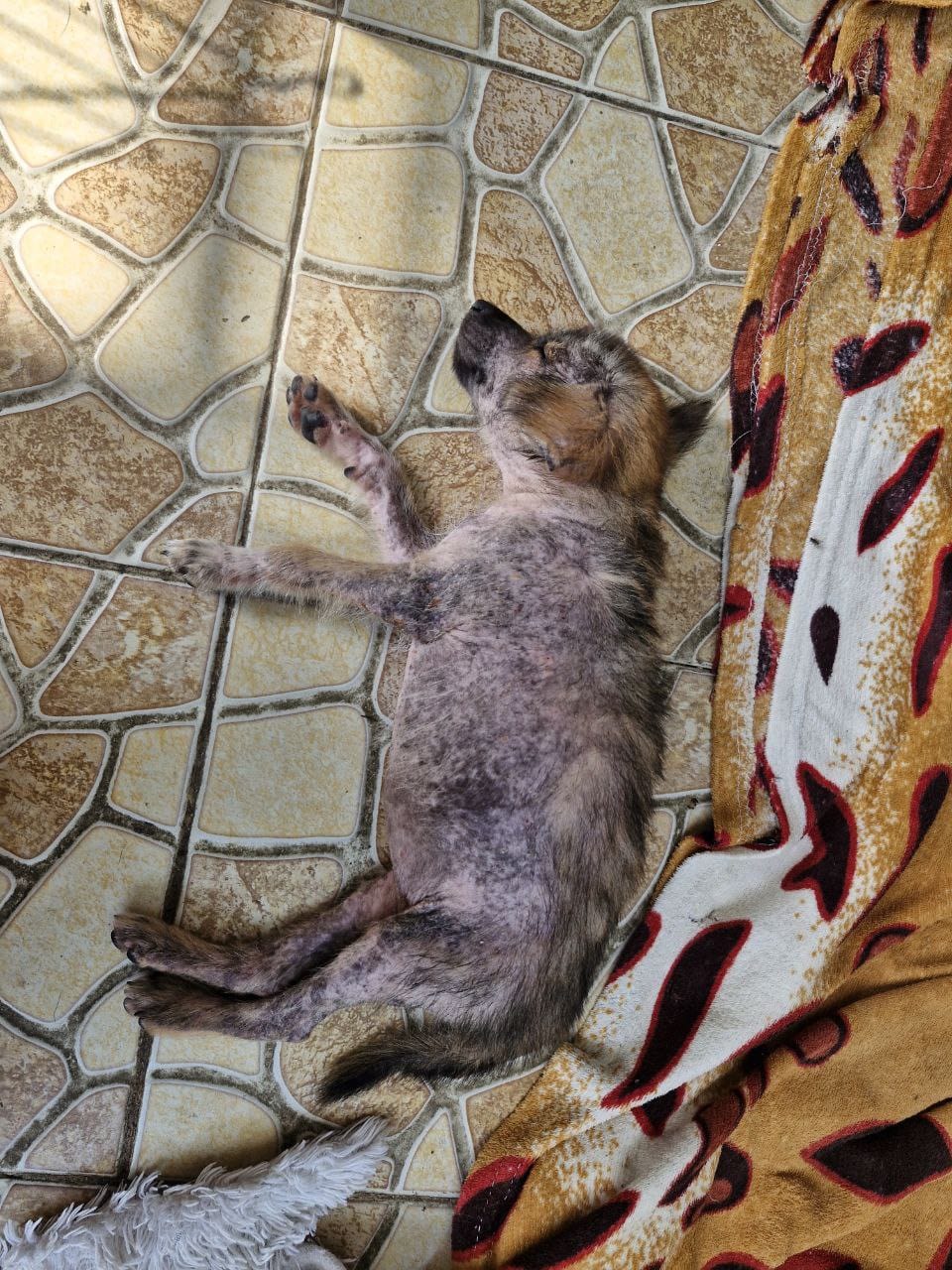
    Street dog in Bali waiting for dog sterilisation

    Many areas in Bali do not grant permission for organised sterilisation. In some places the village banjar or the local agriculture office must approve a mass day before it can run, and that approval can take months, if it comes at all. So at times I run free programs quietly and do not post them publicly, simply so the dogs can be reached before the paperwork catches up. In other places, local interests object when a program brings in an affordable outside vet instead of a costly local one. And there is a painful contradiction I meet often. The same communities that complain about dogs once they overpopulate are sometimes the ones who refuse to let them be sterilised. I navigate all of this patiently, because the dogs cannot wait for everyone to agree.

    To understand why one person still matters in all of this, it helps to see the size of the problem.

    Bali has one of the largest dog populations in Indonesia. Government figures have put it at more than 600,000, with one official 2019 count reaching 647,386, the highest of any province in the country, and more recent estimates cited by national officials reach close to one million. The large majority of these dogs live on the streets or roam freely, with studies estimating somewhere between 80 and 90 percent. Not all of them are homeless. Many are community dogs or loosely owned. But loosely owned or not, they are unsterilised, unvaccinated, and breeding.

    And dogs breed fast. A single female can produce two litters a year, and in an unmanaged population the numbers rebound quickly between any effort to help. This is why the problem grows on its own, quietly and constantly, faster than rescue done one dog at a time can keep up with.

    There are good organisations in Bali, large, medium, and small, and they do real, serious work. But the scale of the problem is larger than all of them combined. To actually bring a dog population down, the animals in one area have to be sterilised at a high level, commonly cited as around 70 percent, within a short time, and then that level has to be held. The same threshold appears in rabies control. Researchers who studied Bali’s own outbreak found that success depended almost entirely on reaching around 70 percent vaccination coverage across the population. Scattered clinic days, a few dozen dogs here and there across the whole island, never reach that level in any single place. The dogs that are missed simply breed the numbers back.

    The programs are also limited in reach, out of necessity. Many help only local Bali dogs and not mixed or western breeds. Many require written government or village permission before a mass day can run. Many are clustered around Ubud and the south, near where they are based. And many depend on owners bringing their dogs in, or on a village welcoming the program. Every one of these limits leaves dogs behind: the truly abandoned, the hidden, and the ones in areas where permission will never come.

    The result is what you see on the streets today. Whole villages, especially in the north around Singaraja and in sensitive areas, are never fully covered. The population there rebounds between visits. And when fear of rabies rises, the fastest tool reached for is often culling.

    Here the facts are very clear, and they are not mine alone. Rabies arrived in Bali in 2008, and in the years that followed more than 100,000 dogs were culled. It did not work. The disease spread across the entire island anyway, more than 130 people died, and researchers later concluded that culling was ineffective and may even have helped rabies spread, because vaccinated dogs were killed, survivors moved away, and new puppies replaced the ones that were gone. What finally brought the outbreak under control was mass vaccination reaching that roughly 70 percent coverage. The World Health Organization and the FAO both state plainly that vaccinating dogs, not killing them, is the effective and cost-effective way to stop rabies.

    And yet the crisis is far from over. In the first half of 2025 alone, Bali recorded more than 34,000 animal bites and twelve human deaths. Tabanan, where I am based, has been among the regencies with the highest bite numbers. Bali has set a target of becoming rabies-free by 2028, and prevention through vaccination and sterilisation is the only path there that the evidence supports.

    This is exactly the gap I work in. I go where the programs cannot or will not: the sensitive villages, the places without easy permission, the areas that fall through every requirement. I do not wait months for approval. I bring my own affordable vet to the site, and I reach the uncounted dogs that no one else does. I am not competing with the organisations, and I am not replacing them. I am filling the space they leave behind, which is the very space where the crisis keeps breeding. That is why one committed person, funded directly, still matters after all these years, and why your donation reaches a dog that would otherwise be missed.

    More about the sterilisation and medication rounds at AbyssPaws.

    Journal of Advanced Veterinary and Animal Research, Bali dog population and free-roaming rate
    ANTARA News, Bali dog population and vaccination coverage
    Tempo, national estimate approaching one million dogs
    PLOS Neglected Tropical Diseases, the 70 percent threshold and why culling fails
    Global Alliance for Rabies Control, the 2008 Bali outbreak
    FAO, vaccination not culling as the recommended strategy
    The Bali Sun, WHO position on culling and Tabanan bite rates
    Travel Tomorrow, 2025 bites and deaths in Bali
    Bali International Hospital, the rabies-free 2028 target

  • Sandcastle

    Sandcastle

    Growing a business takes an incredible amount of energy. But behind the visible success, there is always a mountain of details that need to stay organised: clear contracts, solid compliance, clean workflows, and a team that knows exactly what to do. This is where operational and compliance support earns its keep.

    My expertise lies in step by step clarity. With a background spanning legal support, recruitment, and operational management, my job is to step in, tidy up the loose ends, and make sure your business is secure, compliant, and ready for what comes next.

    Operational and compliance support for growing businesses

    Most people assume that rising revenue or a promising market equals security. Yet beneath the surface, operational leaks quietly drain strength. It is like building a sandcastle: beautiful, impressive, but one strong wave and the structure collapses.

    When the water hits, the instinct is panic. Throw money at templates, or hide behind generic corporate workflows. Those are band aids, not solutions. What matters is clarity. Seeing the leaks, naming them, and addressing them with precision before the tide comes in.

    I do not believe in being stepped on or drowned in noise. Professionalism does not mean weakness. It means standing firm, with compassion and with strategy. My role is to help you protect the foundation, not just decorate the castle.

    It is a performance that does not work. If you do not fix the underlying structural friction that caused the breakdown in the first place, you are just watching the walls melt.

    sandcastle

    You do not need a textbook template or a generic consultant telling you to build higher. You need someone who can look at the actual board, pinpoint the exact spot where the foundation is cracking, and give you a straight read on how to secure it before the next wave hits.

    The sandcastle looks strong until the tide comes in. My role is not to decorate it. It is to help you reinforce it, so the structure holds when the water rises.

    If you are ready to stop managing appearances and start tightening the structure of your operation, hit the contact page. Let us look at the whole board, and make sure the next wave does not take it down.

  • WHY THIS MATTERS

    WHY THIS MATTERS

    Behind every statistic is one dog. Hungry, sick, or frightened, waiting for help that does not come. Below is what the numbers actually say, because this work should stand on evidence, not on feeling alone. Bali dog overpopulation is the root of it.

    Bali has more than 600,000 dogs, around 80 percent of them free-roaming. Rabies, distemper, mange, and parvovirus continue to spread despite government mass vaccination since 2009, because the core problem is overpopulation.

    Bali was rabies free until 2008. The virus arrived on the southern peninsula, most likely on a fishing boat. More than 130 people died and more than 130,000 received post-exposure treatment. Control efforts cost over 17 million US dollars.

    Eighteen years later it has not been eliminated. Between January and late September 2025, Bali recorded 49,094 bite cases and 12 deaths, an average of 182 bites every day.

    This is not distant. Between 1 January and 20 July 2025, Tabanan recorded 4,440 bite cases, among the highest of any regency in Bali. Buleleng recorded two deaths. Tabanan is where I live. Buleleng is where this round of dogs is waiting.

    Between 2008 and 2011, roughly 108,000 dogs were killed in Bali. It did not reduce rabies cases and it did not stop the disease spreading across the island. People moved their dogs out of culled areas and acquired new puppies, replacing what was killed. Culling may have made things worse, because vaccinated dogs were killed and new unvaccinated puppies took their place.

    Culling still happens in Bali today, despite strong evidence that it does not manage rabies.

    my daughetr is feeding bali dog overpopulation

    What did work was vaccination. Once better dog-catching methods allowed teams to reach 70 percent vaccination coverage, human rabies deaths fell from around 4.3 and 4.8 per month to 1.1, and by December 2011 all but 30 villages were considered rabies free.

    The lesson is not complicated. Killing dogs failed. Reaching dogs worked.

    Vaccination protects a dog for a year. Sterilisation removes the next generation permanently.

    The evidence on coverage is clear. Practitioners running catch-neuter-vaccinate-return programmes across Asia aim for 80 to 90 percent coverage inside a defined area, concentrate on sterilising 80 percent of females, and return to the same area repeatedly. Coverage below 70 percent is generally found insufficient for lasting impact. Geographic focus on limited areas is what produces visible results.

    That is exactly how this project is built. One village. Every dog in it. Then the next.

    Scattered clinic days spread thinly across an island never reach that level anywhere. The dogs that are missed breed the numbers back.

    Coverage in Bali must still reach 70 percent of the dog population to break transmission, and sustaining attention against competing health priorities is difficult. The good organisations here do real work. They are also constrained: by permission, by geography, by the requirement that a village agree first.

    I go where those constraints leave dogs behind. The sensitive villages. The places where written permission will never come. I do not wait months. I bring my own vet.

    I am not replacing anyone. I am filling the space they cannot enter, which is the same space where the crisis keeps breeding.

    Rp 500,000 sterilises and medicates one dog in this round.

    Not a projection. Not an estimate. One dog, one surgery, one line in the tracker, photographed and reported to every donor.

    That is why this matters.

    This is the work AbyssPaws does, dog by dog.

    Bali Pet Crusaders, dog population and free-roaming rate

    Global Alliance for Rabies Control, The Bali Rabies Outbreak

    PLOS One, dog population and culling data, Bali and Flores

    The Bali Times, 2025 bite and death figures

    BPBD Bali, regency-level bite and death data to 20 July 2025

    FOUR PAWS International, on continued culling

    ICAM Coalition, sterilisation coverage targets in practice

    Humane Society International research, on the 70 percent sterilisation claim

    WOAH, current vaccination coverage gap in Bali

    🐾 Help make this real. AbyssPaws funds sterilisation and rabies vaccination for street and community dogs across Bali, dog by dog, with full transparency. If this article moved you, the best thing you can do is share it. And if you’re able to give, every rupiah goes straight to dogs no one else is paying for. → See how to support AbyssPaws