
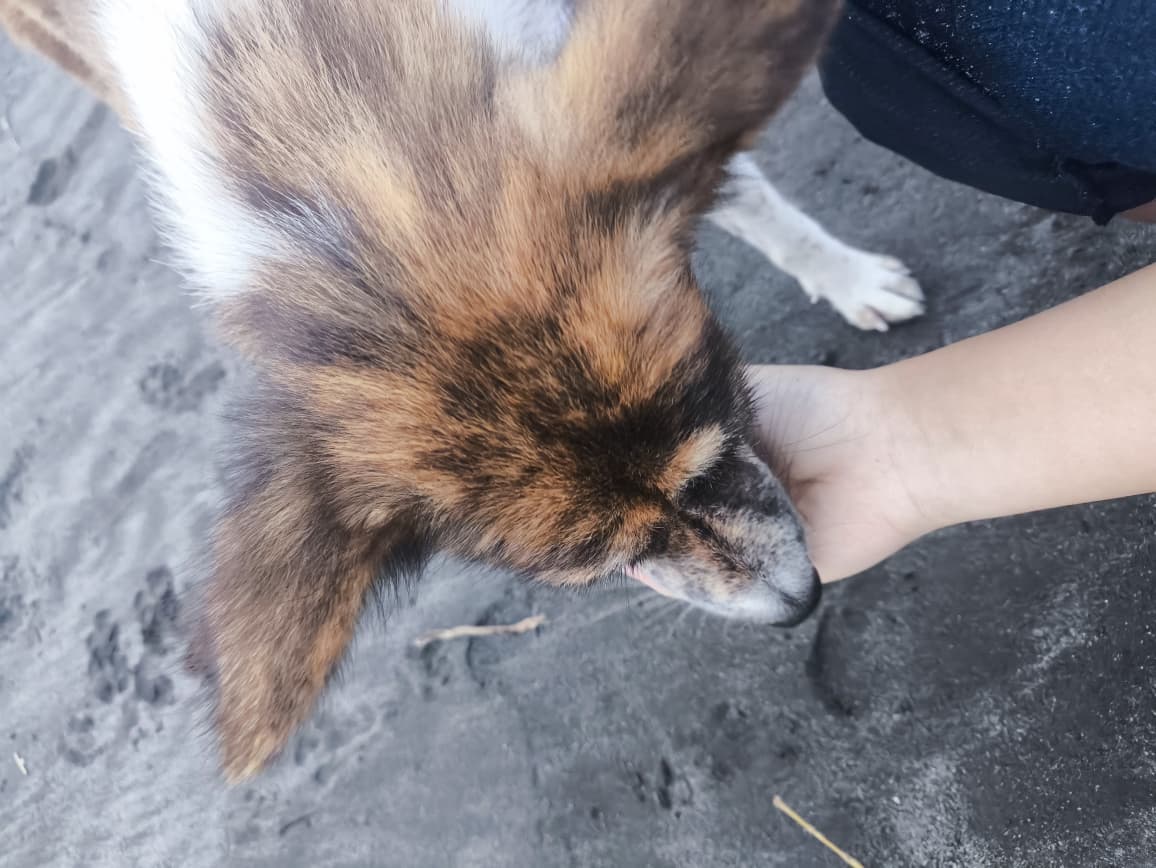
Every time a rabies scare hits the news, the same old reflex returns: round up the street dogs and kill them. It feels decisive. It feels like action. And it fails, every single time. The population rebounds within months, the disease keeps spreading, and the cycle of killing and spending starts all over again.

There is a better way, and it is not a theory. Catch-Neuter-Vaccinate-Return (CNVR) is a scientifically proven, humane strategy used across the world to control free-roaming dog populations and eliminate rabies at its source. It is recognised by the World Health Organization and the International Companion Animal Management (ICAM) Coalition as the global gold standard. The science is settled. What is missing here is the will to apply it fully, and everywhere, not just in a handful of chosen districts.
Two Groups, One Clear Answer
When researchers study whether CNVR actually works, they compare two groups: intervention areas, where dogs are caught, sterilised, vaccinated, and returned to their exact home territory, and control areas, where nothing structured is done. The contrast is stark.
In CNVR areas, the results build steadily over time:
- Population stabilises and declines. Breeding on the streets stops entirely. A five-year, high-intensity CNVR programme across Greater Bangkok, covering nearly 300,000 dogs, produced a measurable reduction in free-roaming dog density of almost 25% over five years.
- Rabies drops toward zero. Once vaccination coverage passes the critical threshold, monthly rabies cases fall consistently.
- Fewer dog bites. Neutered dogs lose the hormonal aggression that spikes during mating season, so territorial and mating-driven attacks decline.
- The community warms to the dogs. That same programme recorded a 39% yearly increase in free-roaming dogs showing visible signs of ownership or care, food, water, shelter, as residents reported less trouble and more comfort living alongside them.
In control areas, where dogs are left unmanaged or simply killed, the opposite unfolds:
- The population explodes. High birth rates and high puppy mortality keep the cycle spinning.
- Rabies persists. The unvaccinated population stays a permanent reservoir for the virus.
- The vacuum effect kicks in. Remove dogs without sterilising, and the empty territory is instantly refilled by migrating dogs or fresh litters from the intact dogs left behind. You cannot kill your way out of it.
- Fear runs high. In one household survey in Bhutan, around 90% of the community viewed stray dogs as a problem to society and 77% saw them as a direct threat to human health. Notably, 84% still favoured birth control over killing as the solution.

The Vacuum Effect: Why Culling Always Fails
This is the single most important thing for any policymaker to understand. Culling does not create a lasting empty space. It creates an opportunity. Every dog removed leaves a resource-rich gap that surviving and incoming dogs rush to fill, and they breed faster to do it. Bali learned this the hard way: during its rabies outbreak, roughly 108,000 dogs were culled with no lasting effect on the spread of the disease. The killing was not just cruel, it was useless.
The related trap is the external inflow problem. Even a successful CNVR zone can be undermined by abandoned, lost, or intact owned dogs migrating in from surrounding areas. This is why the real solution is not just catching street dogs, but scaling the programme to cover owned neighbourhood pets too, and tackling abandonment at the same time.
It Works Everywhere, and It Has for Decades
CNVR is not a Western experiment being tested on Bali. It is a global standard, actively running across Asia (India, Thailand, Bhutan, Sri Lanka), Europe (Turkey, Romania, Greece), and Latin America (Chile, Colombia, Brazil).
The concept began as Trap-Neuter-Return in the United Kingdom and Europe in the 1950s and 1960s, used by animal welfare pioneers to manage feral cat colonies. Adding the “V” for vaccination, specifically to fight canine rabies, came later through collaboration between the WHO, the World Organisation for Animal Health, and global veterinary groups.
And the proof that it works at national scale? Mexico. In November 2019, Mexico became the first country in the world to receive official WHO validation for eliminating dog-transmitted rabies as a public health problem. It did not invent CNVR. It simply committed to decades of continuous mass vaccination and free sterilisation, and it worked. Human deaths from dog-mediated rabies fell from around 600 a year in the 1980s to zero. That is what political will looks like, applied nationwide and sustained, not started and abandoned.
Is It More Expensive Than Culling? Only If You Cannot Count
Upfront, yes, CNVR costs more. It needs surgical equipment, anaesthetic, trained veterinary staff, and field logistics. But that is a front-loaded, one-time-heavy investment, and governments are well placed to meet it by mobilising volunteers, international funding, and donated medication.
Over the long run, culling is far more expensive, because it never ends:
Culling: high expense → dogs killed → population rebounds → repeat the high expense, forever.
CNVR: high expense → dogs sterilised → population declines → costs fall toward zero as the population stabilises.
One is a bottomless pit. The other is an investment that pays itself off.

How Fast Does It Work?
Two different clocks are running here, and it matters that people understand both:
- Rabies suppression is fast. Vaccinate 70% to 80% of the dog population and you reach herd immunity. Transmission drops toward zero within one to two years. This 70% threshold is the WHO’s empirically established target, backed by decades of field evidence.
- Population decline is gradual. It takes three to five years of sustained operations to see a visible drop in the number of street dogs, as the sterilised generation naturally ages out. There is no overnight visual fix, and honesty about that is important.
Bali has already proven the first clock, at least in the areas where the work was actually done. During its rabies outbreak, an island-scale campaign vaccinated over 200,000 dogs and pushed coverage toward 70% in many areas. Monthly confirmed dog rabies cases fell from about 45 before vaccination to around 6, and monthly human deaths dropped sharply. Vaccination did in months what years of culling had failed to do. The catch is that the effort was not sustained evenly or everywhere, which is exactly why rabies has never been fully eliminated from the island. Selective, stop-start coverage is not the same as commitment.
The Honest Downsides
I will not sugarcoat it. CNVR has real limits:
- No instant visual fix. The dogs return to the streets to live out their lives. If someone wants them to simply vanish tomorrow, this is not that.
- The vacuum effect risk remains. Stop too early, or fail to hit 70%, and intact dogs migrate in and numbers bounce straight back.
- It demands ongoing management. Strict data tracking, community coordination, and constant monitoring to catch new, unsterilised, or abandoned animals
These are not reasons to reject CNVR. They are reasons to do it properly, everywhere, and to keep going.
How Bali Could Move Fast
- Deploy Oral Rabies Vaccines (ORV). Instead of manually catching and injecting every dog, distribute dog-friendly baits containing oral vaccine. Field trials in Bali showed that local cattle-intestine and egg-flavoured baits make mass vaccinating free-roaming dogs dramatically faster and easier.
- Launch mobile spay and neuter clinics. Retrofitted trucks target one zone at a time, maximising local coverage before moving to the next district.
- Register and map community dogs. Engage the banjar and local village leaders to identify, track, and monitor free-roaming dogs using simple mobile apps.
One firm line on welfare and safety: field catching can be done by trained volunteers and community members, but the sterilisation itself must be performed only by licensed veterinarians in clean, secure surgical conditions. No shortcuts on that.

This Is the Government’s Job
Yes, absolutely. Public health and safety are core government responsibilities. Leaning entirely on scattered animal welfare efforts is not sustainable, and it never will be, especially when that work only ever reaches selected pockets of the island while the rest is left to fend for itself. Indonesia’s Health Ministry has already proposed mass vaccination to break the chain of rabies transmission in Bali. The knowledge exists. The proof exists. What is needed now is for the Bali government to codify CNVR into local policy, allocate real budget, and run public education alongside the veterinary work, across every regency, not just the convenient ones.
I will keep doing my part, under AbyssPaws, discussing and lobbying at every level I can reach, online, at the banjar level, and with government, within my limitations. If enough of us push, this can be implemented properly in Bali, then across Indonesia, and eventually far beyond it. The dogs did not choose this. We can choose to do right by them, and protect ourselves at the same time.
SOURCES:
- ICAM Coalition, the evidence against culling dogs and cats
- PLOS Neglected Tropical Diseases, the WHO 70% vaccination coverage threshold for rabies control
- MDPI Animals, impact assessment of CNVR in Greater Bangkok (the 25% density reduction and 39% rise in dogs receiving care)
- U.S. CDC, Emerging Infectious Diseases, the response to the 2008 to 2011 Bali rabies epidemic and the failure of culling
- PAHO/WHO, Mexico becomes the first country validated free of dog-transmitted human rabies
- Population dynamics and community attitudes toward free-roaming dogs in Bhutan (the 90% and 77% community perception figures)
- FAO, oral rabies vaccination trials in Bali
- Tempo, Indonesia’s Health Minister proposes mass dog vaccination for Bali
🐾 Help make this real. AbyssPaws funds sterilisation and rabies vaccination for street and community dogs across Bali, dog by dog, with full transparency. If this article moved you, the best thing you can do is share it. And if you’re able to give, every rupiah goes straight to dogs no one else is paying for. → See how to support AbyssPaws
Leave a Reply